Author: Farihin Azlan

  • MagPro Introduces AeroLev 1850 to Enhance Water-Efficient Cooling for AI Data Centers

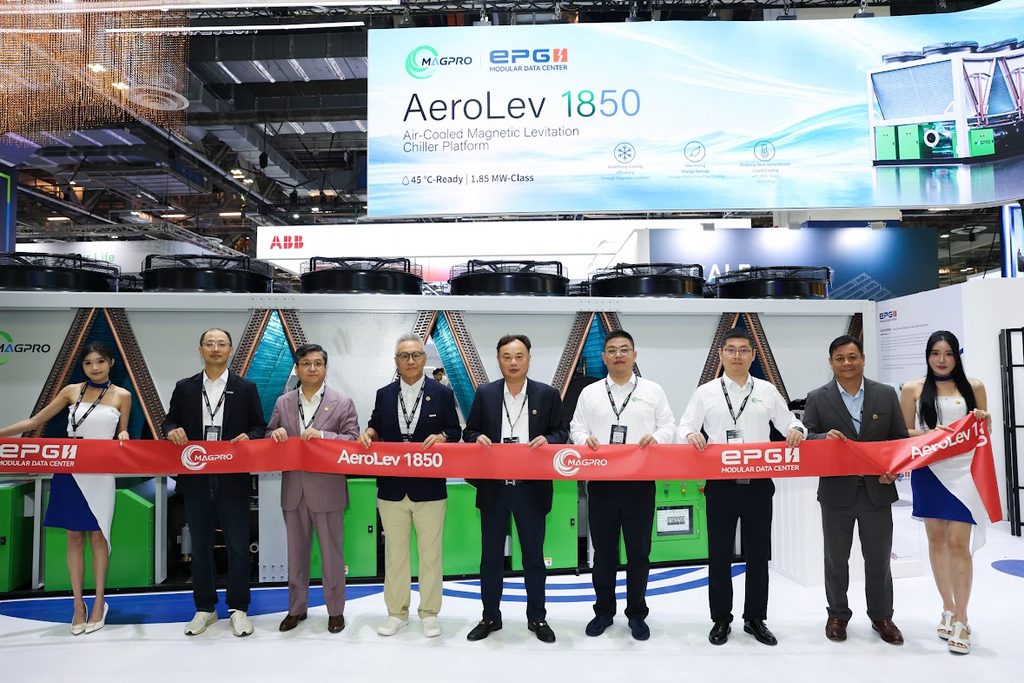
    Mr. Alick Wan (5th from left), Founder and Chairman of EPG Data Technology (Shanghai) Co., Ltd and Mr. William Wu (6th from left), General Manager of Nanjing CIPU Technology Co., Ltd., at the ribbon-cutting ceremony at Data Centre World Asia (DCW Asia) 2026 in Singapore, marking the launch of MagPro’s AeroLev 1850 cooling platform.

    KUALA LUMPUR, October 1, 2026 — MagPro, a joint venture between CIGU Technology Corp. Ltd. and EPG Data Technology (Shanghai) Co., Ltd., has launched AeroLev 1850 at Data Centre World Asia (DCW Asia) 2026 in Singapore, introducing a 1.85 MW-class, 45°C-ready air-cooled magnetic-bearing chiller platform designed to support next-generation AI data centres operating in high-ambient temperature and water-constrained environments.

    The launch comes as Malaysia continues to experience rapid growth in data centre and AI infrastructure investment, increasing the importance of energy and resource efficiency across the sector. As the country expands its digital infrastructure, the Malaysian Government has also placed greater emphasis on ensuring data centre developments have adequate energy and water resources, with applications assessed based on factors including power, water and connectivity requirements.

    Against this backdrop, AeroLev 1850 is designed to address one of the key challenges associated with high-density AI computing — managing rising heat loads while reducing dependence on water-intensive cooling systems. The platform combines a cooling-tower-free architecture, oil-free magnetic-levitation technology and intelligent controls to deliver efficient and reliable cooling while eliminating evaporative cooling water consumption.

    AeroLev 1850 showcased at MagPro’s booth during Data Centre World Asia (DCW Asia) 2026 in Singapore.

    At the core of AeroLev 1850 is a dedicated air-cooled magnetic-levitation compressor with isentropic efficiency of up to 87%. A patented condenser provides more than 3°C of subcooling, while standard EC fans are designed to further improve energy performance. According to MagPro, the combined technologies can deliver up to 40% higher overall energy efficiency and up to 8% lower failure rates compared with conventional oil-lubricated compressors, while maintenance costs can be up to 10% lower than those associated with conventional chillers.

    By eliminating the need for evaporative cooling water, AeroLev 1850 is intended to help data centre operators reduce their reliance on water resources, particularly in locations where water availability and resource efficiency are becoming increasingly important considerations. The platform is also designed to accommodate the industry’s transition towards direct-to-chip and immersion liquid cooling technologies.

    AeroLev 1850 can supply chilled water at temperatures of up to 45°C, allowing it to support emerging high-temperature cooling architectures without requiring significant infrastructure reinvestment. Its standardised modular design is also intended to enable faster installation and flexible expansion as AI computing capacity continues to grow.

    For Malaysia, the technology comes at a time when the rapid development of AI and data centre infrastructure is accompanied by growing attention on energy and water consumption. The Government has indicated that new data centre projects will be assessed according to available energy and water supply capacity, while industry stakeholders are increasingly focusing on sustainable resource management as digital infrastructure expands.

    AeroLev 1850 is positioned to support this evolving landscape by enabling data centre operators to meet increasing cooling requirements while reducing dependence on evaporative cooling water. Its air-cooled architecture could be particularly relevant for facilities seeking to balance high-density computing demands with resource-efficiency objectives.

    “As AI computing continues to drive higher heat density and more demanding cooling requirements, data-centre operators need cooling solutions that can deliver reliable performance while using resources more efficiently,” said William Wu, General Manager of Nanjing CIPU Technology Corp., Ltd.

    “AeroLev 1850 is designed to address these challenges by combining air-cooled magnetic-levitation technology with a water-efficient architecture, supporting the next generation of AI data-centre infrastructure,” he added.

    Alick Wan, Founder and Chairman of EPG Data Technology (Shanghai) Co., Ltd., said the formation of MagPro represents an important step in the company’s global cooling technology strategy. By combining EPG’s engineering and delivery capabilities with CIGU’s magnetic-levitation technology, the joint venture aims to develop more resilient and resource-efficient digital infrastructure that is less dependent on water availability.

    The launch of AeroLev 1850 reflects the growing focus on cooling technologies that can support AI’s rising computational demands while addressing the environmental and resource challenges associated with modern data centre development.

  • Cisco Report: Just 53% of Malaysian Organisations Confident in Detecting and Responding to Compromised AI Agents

    MALAYSIA, 6 OCTOBER 2026 — Only 53% of organisations in Malaysia are highly confident in their ability to detect and respond to a compromised artificial intelligence (AI) agent, highlighting a growing cybersecurity readiness gap as businesses increasingly adopt AI-powered technologies.

    The findings come from Cisco’s latest Relentless Defense Report, which examines how security practitioners are adapting to a threat landscape increasingly reshaped by AI. The report evaluates organisations based on how comprehensively they can protect their environments, how quickly they can detect, respond to and remediate threats, and the operational barriers that may slow them down.

    Organisations in Malaysia recorded an overall average score of 65 out of 100, while only 8% of organisations in Malaysia and globally qualified as Cisco’s best-performing group, known as Relentless Defenders. According to Cisco, these organisations stand out not because they rely on a single strength, but because they combine broad security coverage, rapid response and strong coordination across teams.

    “AI has fundamentally raised the stakes for cyber defense. In a post-Mythos era, the speed of defense is driven by operational agility, not technology alone. The organizations that stay ahead will be those that embed security into how they operate, treat it as more than a compliance exercise, and break down operational silos so the right people can make the right decisions at the right time,” said Chee Kheong Lee, Managing Director, Cisco Malaysia.

    The report identifies organisational friction as a major barrier to stronger cyber defense. In Malaysia, only 43% of organisations say their security, networking and IT teams operate as one team with shared visibility and tools. Meanwhile, 29% say the metrics they measure are too technical to influence executives, while 43% struggle to translate business metrics into information that can support decision-making.

    Data accessibility is another challenge. 49% of organisations in Malaysia spend more time collecting and correlating data across systems than addressing the actual threat, while 40% say critical insights are missed because data remains out of reach.

    At the same time, AI is helping security teams respond faster, although concerns over security are slowing adoption. More than eight in ten security practitioners report improvements of at least 25% in threat detection and response, while more than one-third say AI is significantly reducing their operational burden.

    Despite these benefits, fewer than half of organisations have extensively deployed AI-powered security capabilities. Adoption is highest in network security, data security and privacy, as well as security operations, while identity and access management records lower levels of adoption. More than one-third of organisations have also extensively deployed AI agents within security operations.

    However, concerns around data exposure, compromised systems and third-party handling continue to hold organisations back. As a result, only 53% of organisations in Malaysia are highly confident that they could detect and respond to a compromised AI agent.

    The report also highlights what sets Relentless Defenders apart. Globally, 83% of these organisations operate as a single, coordinated security team with shared visibility and tools across security, network and infrastructure, compared with 37% of other defenders. They are also more likely to apply consistent controls to AI agents and non-human identities, with 86% doing so compared with 37% of other organisations.

    Relentless Defenders also demonstrate greater confidence in responding to AI-related security threats. 77% are highly confident they could detect and respond to a compromised AI agent, compared with 51% of other defenders. In addition, 25% report that AI has helped improve threat-detection speed by more than 100%, compared with just 7% of other organisations.

    The report further points to a connection between operational readiness and security outcomes. Among organisations that increased their security spending, Relentless Defenders were nearly twice as likely to report a reduction in security incidents, at 71% compared with 39% among other defenders.

    As AI agents become increasingly capable of making decisions and taking action within seconds, Cisco’s findings underline the need for organisations to ensure their people, processes and governance frameworks can move at a similar pace. Technology alone may not be enough if operational silos, fragmented data and complex approval processes continue to delay responses to emerging threats.

  • PH-OWNED FINTECH BCRemit CELEBRATES 10 YEARS AFTER SURPASSING US$1 BILLION IN CROSS-BORDER TRANSFERS

    Gio Calma, Co-Founder and Director of BCRemit, speaks during BCRemit’s 10th anniversary celebration event.

    Filipino-led global digital remittance company BCRemit has marked its 10th anniversary by surpassing US$1 billion in total processed transactions, reinforcing its position as a cross-border payment platform serving Overseas Filipino Workers (OFWs) around the world. The milestone comes as the company expands beyond traditional remittance services into enterprise payments while exploring new international payment corridors.

    Founded in 2016 by former overseas worker Oliver “Bong” Calma and his son Jose Angelo “Gio” Calma, BCRemit was established from the founders’ personal experience with the high costs and delays associated with sending money home. Built around the mission of helping OFWs send money back home faster, the platform has since processed more than one million transactions across its growing network.

    Founder and CEO Oliver Calma said the company’s mission has always been centred on demonstrating how Filipino-led innovation can create solutions with global impact. The latest US$1 billion milestone reflects BCRemit’s growth over the past decade and its expanding role in facilitating digital cross-border payments for Filipinos living and working overseas.

    A group photo of BCRemit with (4th from left, below) Gio Calma, Co-Founder and Director, and Oliver Calma, Founder and CEO.

    BCRemit has differentiated its remittance infrastructure by leveraging blockchain technology and USD stablecoins to facilitate faster and more cost-efficient international transfers. The company said its average transaction cost is approximately 1%, with no hidden fees, compared with the reported global average remittance cost of 6.4%. Its digital infrastructure is also designed to enable near-instant transfers, helping to overcome the three- to five-day delays associated with some traditional banking networks.

    Today, BCRemit operates across 24 countries, with its international expansion including market entries into Spain in June 2021 through its licensed entity BC Remittance S.L., followed by Canada in January 2022 and the United States in August 2022. These expansions have strengthened the company’s international presence while supporting its broader strategy of building a more connected digital remittance network.

    Beyond transfers to Philippine banks such as BDO and BPI, BCRemit customers can access cash pickup services and digital wallets including GCash and Maya. Through BCRemit Pay, overseas workers can also settle bills and financial obligations directly, including SSS contributions, Pag-IBIG regular and MP2 savings, loan repayments, property-related bills and mobile top-ups. The company also provides 24/7 human customer support, combining digital convenience with personalised assistance for important family transactions.

    Looking ahead, BCRemit is expanding its cross-border settlement infrastructure beyond individual remittances. The company is scaling its payment rails to serve small and medium-sized enterprises, business process outsourcing firms and freelancers, while also developing white-label payout integrations for third-party financial institutions.

    The company is also preparing to enter high-volume remittance corridors across the Middle East and Asia-Pacific, with Saudi Arabia, Australia, Japan and South Korea identified among its priority markets. The expansion is expected to further broaden BCRemit’s international reach and strengthen its position within the evolving global digital payments ecosystem.

    Operating under regulatory oversight from the Bangko Sentral ng Pilipinas, the UK’s Financial Conduct Authority, Banco de España, FINTRAC and the Bank of Canada, BCRemit continues to emphasise regulatory compliance as it expands its services. With the company serving a global community of more than 10.8 million overseas Filipinos, its 10-year milestone signals the growing role of digital financial infrastructure in making cross-border money transfers faster, more accessible and more efficient.

    For more information, you may visit https://www.bcremit.com/ or follow them on Facebook, Instagram, and TikTok.

  • HONOR MAGIC9 PRO MAX CAPTURES HIGH-SPEED MOTORSPORT ACTION ALONGSIDE PROFESSIONAL PHOTOGRAPHERS AT SEPANG

    KUALA LUMPUR, 5 October 2026 — HONOR’s upcoming flagship smartphone, the Magic9 Pro Max, recently made an unexpected appearance at Sepang International Circuit, where it was spotted alongside professional photography equipment capturing the intensity of high-speed motorsport action. The appearance offered an early glimpse of the smartphone’s imaging capabilities in Malaysia, just days after its official launch in China on 28 September.

    The trackside showcase placed the HONOR Magic9 Pro Max in an environment where photography performance is put to the ultimate test. Motorsport photographers need to react quickly to fleeting moments while maintaining sharpness and detail, with racing cars capable of exceeding 300km/h. Traditionally, capturing such action requires professional cameras paired with large telephoto lenses to track fast-moving subjects from a distance.

    Against this backdrop, the appearance of a smartphone alongside professional photography gear naturally attracted attention from photographers at the circuit. One photographer at the event expressed surprise after seeing the images captured with the device, noting that the results demonstrated impressive sharpness and detail despite the challenging conditions of high-speed motorsport photography.

    The showcase also highlighted the imaging capabilities of the HONOR Magic9 Pro Max, which marks the 10th anniversary of HONOR’s Magic series. The company has positioned the latest flagship as the biggest upgrade in the history of the Magic lineup, with a dual 200MP ARRI cinematic imaging system designed to deliver enhanced photography performance, particularly in areas such as telephoto imaging and high-speed capture.

    The focus on long-range photography and fast-moving subjects reflects how flagship smartphones are increasingly competing in specialised imaging scenarios beyond conventional everyday photography. Features such as powerful zoom, subject tracking and high-speed image capture are becoming important differentiators as smartphone manufacturers continue to push the boundaries of mobile photography.

    The HONOR Magic9 Pro Max has also generated strong early interest in China following its launch. According to HONOR, the Magic series secured the top position among new Android flagship devices on its first day of sales, while sales reportedly surged 194% within the first 30 minutes, surpassing the performance of the previous generation.

    While the Magic9 Pro Max has yet to receive an official Malaysian availability date, its appearance at Sepang International Circuit has already generated interest among local photography and technology enthusiasts. By putting the flagship in a demanding motorsport environment alongside professional photography equipment, HONOR has offered a glimpse into the direction of its latest imaging technology ahead of its Malaysian debut.

  • ACADEMIC EXCELLENCE ADVANCING THE FUTURE OF HEART RHYTHM CARE AT IJN

    Institut Jantung Negara (IJN) continues to strengthen its commitment to clinical and academic excellence following the achievement of Consultant Cardiologist and Electrophysiologist Dr Suraya Hani Kamsani, who recently received her Doctor of Philosophy (PhD) scroll from the University of Adelaide, Australia.

    The achievement marks a significant milestone as Dr Suraya is recognised as the first Malaysian woman to obtain a PhD in electrophysiology, a highly specialised area of cardiology focused on the diagnosis and treatment of heart rhythm disorders. Beyond the personal accomplishment, her achievement reflects IJN’s continued efforts to develop clinician-scientists who are able to combine specialist clinical expertise with research, scientific inquiry and the generation of new medical knowledge.

    As cardiovascular medicine continues to evolve through increasingly complex technologies and treatment approaches, academic and research expertise has become an important component of modern clinical practice. Exposure to research allows clinicians to critically assess emerging evidence, evaluate new technologies and translate scientific discoveries into practical approaches that can ultimately benefit patients.

    Dr Suraya’s clinical and research interests are particularly focused on atrial fibrillation and advanced ablation technologies. Her work has contributed to research involving pulsed field ablation (PFA), an emerging technology used in the treatment of abnormal heart rhythms, including first-in-human research in the field.

    Acting Group Chief Executive Officer of IJN, Datuk Dr Shaiful Azmi Yahaya, said Dr Suraya’s achievement represents the type of integration between clinical practice and academic research that IJN aims to further strengthen.

    According to him, clinical excellence can no longer depend solely on experience in the treatment room, but must also be supported by research, evidence and continuous learning. Clinicians who actively participate in research and advanced academic work are better equipped to assess new technologies, question existing practices and contribute meaningful advances to patient care.

    Dr Suraya pursued her doctoral research while continuing her clinical responsibilities, building on her experience in diagnosing and managing complex heart rhythm disorders. Her clinical practice includes advanced electrophysiology procedures such as catheter ablation, as well as the implantation and management of cardiac rhythm devices.

    Her research and publications have also explored areas including atrial fibrillation, pulsed field ablation, cardiac pacing and emerging technologies in electrophysiology. Through this combination of clinical practice and research, she has continued to contribute to the advancement of knowledge in the management of heart rhythm disorders.

    For Dr Suraya, the pursuit of a PhD represented more than an academic qualification. Her doctoral journey strengthened the relationship between research and clinical practice, encouraging a more critical approach to evidence and decision-making. She emphasised that the ultimate value of research lies in translating knowledge into better decisions, safer procedures and new treatment approaches for patients.

    Her achievement also highlights the growing opportunities for Malaysian women to pursue highly specialised areas of cardiovascular medicine and contribute to medical research and innovation at an international level. It demonstrates how clinical specialists can play a broader role in advancing healthcare through both patient care and scientific discovery.

    With research, education and specialist development continuing alongside its clinical services, IJN remains focused on building a strong clinical-academic ecosystem. By nurturing specialists who are equipped to bridge scientific research with clinical practice, the institution aims to ensure that advances in cardiovascular medicine can be translated into meaningful improvements in patient care.

  • WHEN NIGHT VISION DIMINISHES: UNDERSTANDING RETINITIS PIGMENTOSA AND LIFE BEYOND DIAGNOSIS

    Most people only think about their eyesight when changes occur, such as difficulty seeing in low light and a gradual loss of peripheral vision. 

    Most people only start paying attention to their eyesight when something begins to feel different, such as struggling to see in the dark or experiencing a gradual loss of peripheral vision. These changes can develop quietly and become increasingly difficult to ignore, particularly for people living with retinitis pigmentosa (RP), a rare group of inherited retinal conditions that can cause progressive vision loss.

    According to Dr Tara Mary George and Dr Daphne Teh, Consultant Ophthalmologists and Medical Retina and Uveitis Specialists at Sunway Medical Centre, Sunway City (SMC), RP can present and progress differently from one individual to another. While there is currently no cure for the condition, early diagnosis and appropriate care can help patients manage their condition, maximise their remaining vision and maintain their quality of life.

    RP is not a single disease but a group of inherited retinal disorders in which the retina does not function normally. The retina is the light-sensitive layer at the back of the eye that converts light into signals sent to the brain, allowing us to see. In RP, genetic mutations disrupt this process, particularly affecting rod cells that are responsible for vision in low-light conditions and peripheral vision.

    Because RP typically develops gradually, its early symptoms can easily be overlooked or mistaken for ordinary changes in eyesight. One of the most common early signs is difficulty adapting to dim environments. A person may take significantly longer to see after entering a dark room or cinema, while others may struggle to navigate safely when lighting is poor. As the condition progresses, peripheral vision may narrow, resulting in tunnel vision and making patients more likely to bump into objects around them.

    Although RP has a genetic basis, its impact varies considerably between individuals. Some people may develop symptoms during childhood, while others may only notice changes in their vision later in adulthood. The timing and severity can depend on the specific genetic mutation involved. When more critical parts of the retina are affected, symptoms may appear earlier and be more severe, while milder forms may not become apparent until later in life.

    The inheritance pattern can also vary because RP can result from different genetic causes. Some cases may occur within families, while others may arise without a known family history. This complexity is why RP is often described as an inherited retinal dystrophy. Given these variations, early detection and timely care are important in helping patients understand their condition, prepare for potential changes and take appropriate steps to manage its progression.

    Diagnosing RP involves more than a routine eye examination. Assessment typically begins with a detailed medical history, followed by specialised tests such as visual field assessments and optical coherence tomography (OCT) scans. These tests can help identify changes in vision and retinal structure. In some cases, an electroretinogram (ERG) may also be performed to assess how the retina responds to light, although access to ERG testing remains limited in Malaysia.

    A common sign is difficulty navigating in low-light settings, where the eyes may take longer to adjust or not adapt well. As the condition progresses, patients may develop tunnel vision and begin bumping into objects as side vision diminishes.

    Individuals experiencing persistent difficulty seeing at night or noticing changes in their peripheral vision should therefore seek an assessment from an eye specialist rather than simply updating their glasses. Early evaluation can help identify the underlying cause and ensure that appropriate monitoring and support are provided.

    While an RP diagnosis can understandably feel overwhelming, current care focuses on helping patients adapt to changes in vision and maintain independence. According to Dr Daphne, management involves proactive and supportive care, including regular monitoring to track disease progression and identify or manage complications that may develop. Follow-up care may include vision assessments, retinal imaging and treatment for related conditions such as cataracts or macular swelling.

    Practical adjustments at home and in daily routines can also improve safety and confidence. These may include improving lighting around the home, reducing night-time driving and organising living spaces to create clearer and safer pathways. Early referral to low-vision rehabilitation services is another important aspect of care, as learning to adapt to vision changes earlier can help patients cope more effectively over the long term.

    Technology is also playing an increasingly important role in helping people with RP remain independent. Digital magnifiers, text-to-speech software and smartphone applications can assist with reading, recognising objects and completing everyday tasks. Artificial intelligence (AI)-powered applications can also describe surroundings or read text aloud in real time, providing potentially valuable assistance when introduced early in the course of vision loss.

    Beyond medical care and assistive technology, emotional and social support are equally important. An RP diagnosis does not necessarily mean losing independence or giving up on personal ambitions. With the right support and adaptations, many people living with the condition can continue their education, pursue careers and lead fulfilling lives.

    Diagnosing RP goes beyond a routine eye check. It typically begins with a detailed medical history, followed by specialised tests to detect early changes in vision and retinal structure. 

    For newly diagnosed patients and their families, uncertainty can often be one of the most difficult aspects of the condition. Ongoing research, including developments in gene therapy, is creating new possibilities for the future. However, raising awareness of early symptoms and ensuring patients receive appropriate assessment, care and support remain essential.

    Understanding the condition, preparing for changes and seeking the right support can make a meaningful difference in living with RP. By taking things one step at a time, accessing appropriate eye care and exploring rehabilitation and assistive technologies, patients can continue working towards greater confidence, independence and quality of life.

  • CELCOMDIGI PERKENAL PROTECT+ DENGAN APPLECARE SERVICES

    PETALING JAYA, 5 Oktober 2026 – CelcomDigi Berhad (CelcomDigi) kini menawarkan Protect+ dengan AppleCare Services, pelan perlindungan pelbagai peranti yang direka bagi memberikan perlindungan lebih menyeluruh kepada peranti Apple yang layak, termasuk iPhone, iPad, Apple Watch, AirPods dan fon kepala Beats.

    Menerusi Protect+ dengan AppleCare Services, CelcomDigi terus memperkukuh komitmennya untuk menyediakan pengalaman pemilikan peranti yang lebih mudah dan menyeluruh kepada pelanggan. Dengan hanya satu langganan bulanan, pengguna boleh memilih untuk melindungi satu peranti Apple yang layak atau menambah sehingga tiga peranti tambahan di bawah pelan yang sama.

    Pelan ini ditawarkan daripada serendah RM50 sebulan bersama pembelian model iPhone baharu yang layak menerusi program ansuran peranti Easy360 CelcomDigi, memberikan pelanggan pilihan perlindungan yang lebih fleksibel tanpa perlu menguruskan beberapa pelan secara berasingan.

    Antara manfaat yang disediakan menerusi AppleCare Services ialah perlindungan terhadap kerosakan tidak sengaja, termasuk kerosakan akibat terjatuh atau terkena tumpahan cecair. Pelanggan turut mendapat akses kepada sokongan keutamaan 24/7 daripada pakar Apple, selain perkhidmatan pembaikan yang pantas dan mudah melalui penyedia perkhidmatan yang diperakui Apple.

    Pelan tersebut turut merangkumi perkhidmatan penggantian bateri apabila kapasiti bateri peranti menurun, membantu pelanggan mengekalkan prestasi peranti mereka untuk tempoh yang lebih lama. Perlindungan yang ditawarkan bertujuan memberikan ketenangan kepada pengguna sekiranya berlaku kerosakan atau keperluan penyelenggaraan terhadap peranti yang dilindungi.

    Selain manfaat AppleCare Services, Protect+ turut menyediakan perlindungan terhadap kehilangan dan kecurian bagi iPhone. Sekiranya peranti tidak lagi berada dalam simpanan pelanggan akibat kehilangan atau kecurian, pelanggan boleh menerima peranti gantian yang setara, tertakluk kepada terma dan syarat pelan.

    Protect+ dengan AppleCare Services turut memberikan fleksibiliti kepada pelanggan untuk menukar peranti yang layak mengikut keperluan. Pendekatan ini membolehkan pengguna menyesuaikan perlindungan berdasarkan peranti yang digunakan, sekali gus menawarkan pilihan yang lebih praktikal dalam mengurus pelbagai peranti Apple di bawah satu langganan.

    Pelan Protect+ dengan AppleCare Services kini boleh dilanggan melalui laman web CelcomDigi, kedai dalam talian serta kedai runcit CelcomDigi di seluruh negara. Pelanggan yang ingin mendapatkan maklumat lanjut mengenai pelan dan terma perlindungan boleh merujuk kepada laman rasmi CelcomDigi.

  • CELCOMDIGI UNVEILS NEXT PHASE OF CD:NXT TO STRENGTHEN MALAYSIA’S DIGITAL TALENT

    PETALING JAYA, 2 OCTOBER 2026 — CelcomDigi Berhad (CelcomDigi) has unveiled the next chapter of CD, its flagship talent development initiative aimed at preparing Malaysia’s next generation of talent through stronger collaboration between academia and industry. The latest phase is anchored by three key programmes — campus@celcomdigi, the Young Talent Programme (YTP), and Certifications — designed to equip Malaysians with practical workplace skills, leadership capabilities and competencies in emerging technologies.

    The new phase of CD was officiated by the Director General of the Ministry of Higher Education, Datuk Prof Dr Azlinda Azman, on behalf of the Minister of Higher Education, Dato’ Seri Diraja Dr Zambry Abdul Kadir. The initiative is designed to support the evolving needs of Malaysia’s digital economy while contributing to the country’s long-term growth ambitions, in line with the aspirations of the Malaysia Higher Education Plan (RPTM) 2026-2035.

    A key component of the initiative is campus@celcomdigi, a first-of-its-kind programme in Malaysia that brings industry experience into the classroom at an early stage. Through the programme, second-year students will work on real business challenges as part of their coursework, while receiving continuous mentorship from industry practitioners throughout their studies.

    Selected final-year students will also have the opportunity to undertake industry residencies at CelcomDigi’s dedicated on-site campus at its headquarters. Working alongside experienced teams, students will contribute to live projects as part of their final-year experience, giving them valuable exposure to workplace practices and industry expectations before entering the workforce.

    The initiative will initially be launched with four university partners — Universiti Malaya (UM), Universiti Teknologi MARA (UiTM), Universiti Kuala Lumpur (UniKL) and HELP University. Through the final-year residency programme, CelcomDigi aims to reach more than 300 students annually, with plans to progressively expand the initiative to additional universities in the coming years.

    Meanwhile, CelcomDigi’s Young Talent Programme (YTP), launched in 2025, continues to provide a structured two-year pathway for developing high-potential graduates. The programme combines rotational assignments, mentorship and hands-on participation in strategic business projects to help young professionals develop the skills, capabilities and mindset needed to succeed in modern organisations.

    Following the successful inaugural cohort, YTP has welcomed its second batch of 20 high-potential young talents. The participants will embark on their career development journey across a range of disciplines, including Cloud Engineering, Cybersecurity, Data and Business Analytics, Digital Product Development, and AI and Automation.

    Completing the CD portfolio is the Certifications programme, which builds on the foundation established through CelcomDigi Metaversity™ to broaden access to learning opportunities in emerging technologies. Through recognised certifications in artificial intelligence (AI) and extended reality (XR), the programme provides Malaysians across different age groups with industry-relevant qualifications while helping them strengthen their digital capabilities.

    CelcomDigi Chief Executive Officer Albern Murty said the company’s continued engagement with universities and Malaysian graduates has reinforced its belief that the country produces exceptional human capital with the capabilities needed to support Malaysia’s economic ambitions and the next phase of digitally driven growth.

    He highlighted the important role of leading Malaysian corporations in working alongside the government to create an environment where young Malaysians can develop, innovate and take on leadership roles. Through CD, CelcomDigi remains committed to investing in talent development today to nurture a generation of Malaysians who can build their careers, innovate with greater freedom, develop strong character and contribute to shaping the nation’s future.

    Overall, the expanded CD ecosystem reflects CelcomDigi’s continued commitment to developing future-ready talent by connecting academic learning with real-world industry experience. By providing pathways spanning education, workplace exposure, leadership development and technology certifications, the initiative aims to help equip Malaysia’s workforce with the skills needed to navigate an increasingly digital economy.

  • EMIRATES ENTERS WINTER SEASON WITH STRONG BOOKINGS AND EXPANDED NETWORK INVESTMENTS

    Dubai, UAE, 2 October 2026: Emirates has closed the summer season ahead of expectations and is entering the winter travel period with strong booking momentum across a growing number of markets. The positive outlook comes as the airline continues to invest in its fleet, onboard products and global network, while giving customers greater booking flexibility and more comprehensive travel protection.

    Between July and August, Emirates carried more than 8.6 million passengers, maintaining healthy seat load factors across its network. The airline is currently operating at around 93% of its pre-disruption capacity, with demand continuing to build as the winter travel season approaches.

    Winter bookings, which begin from late October, are tracking positively despite a broader shift in travel behaviour, with customers increasingly making their travel decisions closer to departure. South Africa, Brazil, India, Portugal, Egypt, Ghana, Colombia, Saudi Arabia and Pakistan are among the markets where demand is currently ahead of the same period last year. Demand from Nepal is also showing positive momentum through Emirates’ partnership with flydubai.

    The UAE remains a strong outbound market, while demand for Emirates’ premium travel offering continues to grow. During the summer season, Emirates services to and from West Asia, Europe, the Middle East, the Americas and Africa recorded seat load factors above 75%, with particularly strong performance on routes connecting Indonesia, Côte d’Ivoire and the UK.

    Demand for Premium Economy also continued to increase across the network, with the Americas recording the strongest growth for the cabin. Dubai, meanwhile, remained a popular inbound destination. In late August alone, more than 500,000 customers arrived in Dubai on Emirates flights, representing a 7% increase compared with the same period last year. Travellers included returning residents preparing for the new school year, new residents relocating to Dubai for work and lifestyle opportunities, as well as visitors taking late-summer breaks in the city.

    Throughout the summer, Emirates strengthened its flexibility proposition by offering customers one free date change across its network, as well as unlimited free date changes for journeys to Dubai. The airline also reduced refund fees on Dubai journeys and introduced Comprehensive Travel Cover, a travel protection policy that includes medical coverage in cases involving conflict and airspace disruption, alongside airline-managed accommodation, ground assistance and rebooking support where required.

    Emirates A350

    Emirates is also accelerating investments in its fleet and onboard experience. Since January 2026, the airline has welcomed 18 aircraft, comprising 11 new Airbus A350s and seven Boeing 777 freighters. Another six A350s are scheduled to join the fleet before the end of December.

    To date, 104 aircraft have completed Emirates’ extensive retrofit programme, including 53 Boeing 777s and 51 A380s. This has increased the number of aircraft featuring Premium Economy and Emirates’ latest cabin products to 137, with the figure expected to reach 155 aircraft by the end of December.

    The expanding product footprint is giving more customers the opportunity to experience Emirates’ latest cabins. Premium Economy is now available on services to 90 destinations, with another six destinations scheduled to receive the product before the end of the year, including Paris, Delhi and Stockholm.

    Connectivity is also being enhanced, with close to 50 Emirates aircraft now equipped with Starlink. Installations are progressing alongside the retrofit programme, allowing more passengers to benefit from high-speed inflight internet.

    The airline has also introduced several new features this year, including its innovative U-dream headrests onboard the A350 Economy Class, privacy dividers for Premium Economy seats and the next generation of its signature lounges. New lounge facilities are already welcoming customers in Munich, Frankfurt and Manchester.

    As winter approaches, Emirates will continue expanding its network through new destinations, additional frequencies and the deployment of its latest aircraft across key markets. Helsinki joined the Emirates network on 1 October with A350 services. The aircraft currently serves 30 destinations from Dubai, with this figure expected to increase to 36 by the end of the year.

    To meet rising demand, Emirates is also adding capacity on several routes. Accra, Tokyo Narita, Ho Chi Minh City and Hanoi will receive a second daily service, while one of the airline’s daily Delhi services will be upgraded to an A380. The A350 will also be deployed to Larnaca, Malta, Nairobi and Hamburg from late October, followed by Mauritius in November. Retrofitted Boeing 777 aircraft will be introduced to Stockholm in October and Frankfurt in November, bringing Emirates’ latest onboard products to more destinations.

    Beyond its own network, Emirates’ 168 codeshare, interline and intermodal partnerships provide customers with access to an additional 1,750 cities. On an average day, more than 13,000 Emirates customers connect to their onward destinations through partner airlines.

    The Emirates and flydubai partnership also remains a key feature of the Dubai hub experience. Together, the two airlines provide access to more than 214 unique destinations across over 100 countries, generating more than 4,600 connection opportunities through Dubai. Emirates customers can access more than 100 flydubai destinations, while flydubai passengers can connect to more than 140 Emirates destinations.

    Kathmandu, Zanzibar, Krabi and Belgrade are among the most popular flydubai destinations for Emirates customers. Since the partnership was launched in 2017, the two airlines have carried more than 28 million passengers across their integrated network.

    Network expansion has also continued through flydubai, which added Chittagong in Bangladesh in April 2026, Benghazi in Libya in June, followed by Aleppo in Syria and Bangkok’s Don Mueang Airport in July. Further expansion in September included Pokhara in Nepal, strengthening Dubai’s position as a global aviation hub and enhancing connectivity for travellers across the region and beyond.

  • CelcomDigi Reinforces 5G Leadership as DNB Moves into Its Next Phase

    PETALING JAYA, 1 OCTOBER 2026 – CelcomDigi Berhad (CelcomDigi) has strengthened its position in Malaysia’s 5G ecosystem following the completion of Digital Nasional Berhad’s (DNB) RM5.2 billion financing exercise, the award of DNB’s long-term 5G spectrum allocation and progress towards the transfer of Minister of Finance (Incorporated) (MoF Inc.) shareholding to mobile network operator (MNO) shareholders.

    Together, these developments provide greater certainty across financing, spectrum availability and ownership, enabling CelcomDigi to leverage its scale and extensive network assets to unlock network and cost synergies, improve 5G economics and deliver enhanced connectivity experiences for consumers and enterprises.

    The completion of DNB’s financing exercise provides a stronger foundation for its capital structure and financial capacity to support key network priorities. Based on DNB’s current regulatory commitments and funding requirements, the financing is also expected to reduce the need for additional equity funding from its MNO shareholders, allowing greater focus on improving the efficiency and performance of Malaysia’s 5G network.

    The award of DNB’s 5G spectrum for a 15-year period provides greater long-term certainty over spectrum availability and associated costs, supporting more effective network planning and investment. With 200MHz of contiguous mid-band spectrum, DNB is well positioned to address growing demand from consumers and enterprises while providing a strong foundation to modernise the network, expand indoor building solutions (IBS), enhance coverage and maximise spectrum utilisation.

    Combined with CelcomDigi’s extensive network footprint and infrastructure, these developments create further opportunities to strengthen 5G capacity, coverage and overall customer experience. The integration of network assets and capabilities can also support more efficient utilisation of existing infrastructure while enabling continued network expansion.

    Once the transfer of MoF Inc.’s shareholding is completed, the MNO shareholders are expected to take on a greater role in jointly steering DNB’s strategic and operational priorities. This will provide an opportunity to draw more extensively on the collective expertise, scale and capabilities of Malaysia’s telecommunications industry in supporting the next phase of 5G development.

    With more than 30 years of telecommunications experience, CelcomDigi will bring its scale, nationwide network assets and industry expertise to support DNB. This includes leveraging existing infrastructure, sites and capabilities to drive greater cost efficiencies, support coverage expansion and accelerate indoor 5G deployment.

    Greater synergies between DNB and MNO shareholder infrastructure could also contribute to a more efficient and sustainable 5G network by optimising existing assets and reducing infrastructure duplication. For CelcomDigi, this creates opportunities to further leverage its nationwide network scale to meet the evolving connectivity needs of consumers and businesses.

    Overall, the latest developments in DNB’s financing, spectrum allocation and ownership structure provide a clearer foundation for the next phase of Malaysia’s 5G development. By bringing together DNB’s network capabilities with CelcomDigi’s extensive infrastructure, scale and telecommunications experience, the collaboration is expected to support a more capable, efficient and sustainable 5G ecosystem that can meet growing demand for advanced connectivity.